BookTrib’s Bites: Bestselling Suspense, Tales for Children, Words to Live By
(NewsUSA) -
- 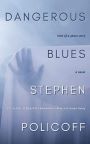 Dangerous Blues by Stephen Policoff
A dark yet comic storm of family relationships laced with a buzz of the supernatural, where the fleeting light of the present must constantly contend with the shadows of the past.
Paul and daughter Spring sublet a New York apartment after the death of Paul’s wife Nadia. Paul meets the mother of one of Spring’s new friends, Tara, a blues singer and perhaps the spark Paul needs. But Paul fears he is being haunted by Nadia. Tara, who grew up in a New England cult, is haunted, too.
“Wildly creative, the absolute perfect chord of magic, a wifely ghost, a bit of shamanism and a lot about human bonds and beliefs, all set against the backdrop of a Greenwich Village blues club,” says Caroline Leavitt, New York Times bestselling author. Purchase at https://bit.ly/3YC953J.
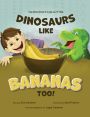 Dinosaurs Like Bananas Too! by Erin Ciaravino
An exciting, illustrated children's book for ages 2 to 8 that explores the beauty of unexpected adventure in the most unlikely of places.
Young Logan Ciaravino created the story as a tool of self-expression when suffering from a speech delay. By using his imagination, he was able to articulate his first creative thought, which is the story of “Dinosaurs Like Bananas Too!”
Logan, the story's main character, encounters a new friend, T-Rex, and the two embark on an imaginary journey through Logan's home. Each room transforms into a magical place where new friends teach the pair exciting new things, encouraging us to be unassuming in how we approach the world. The key message: When you are open to adventure, there are lots of new things to try!" Purchase at https://bit.ly/3lkcNRc.
 Perfectly Imperfectly YOU by Jamie James
Have you ever wanted to fit in? Maybe wished you could change something about yourself? How about being a little embarrassed of something you feel is out of place? Although it may not always feel like it, all your "imperfections" make you perfect! YOU, as you come, are exactly who our world needs!
Through her deep love and commitment to give her children what her childhood didn't have, Jamie James wrote some stories that would not only be easy to read but contain simple understanding to help children through their questions and concerns. Not only did she fall in love with writing, she saw the beautiful emotion and reactions from children close to her. Jamie's passion is once again shown through this reignited fire. Purchase at https://bit.ly/3S2CphW.
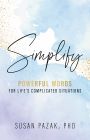 Simplify: Powerful Words for Life’s Complicated Situations by Susan Pazak, PhD
Simplify your day by using these powerful words, scriptures, and thoughts to shift your perspective, mood, and outlook. Life doesn't need to be terribly complicated.
Negative words and thoughts complicate everyday life, especially during difficult times. Core beliefs and negative words and thoughts can be changed to create a simple life. Simplify contains 90 sayings and scriptures that give specific ways to change our words and thoughts during any of life's situations and circumstances.
Discover how changing what we say and think allows us to have peace amidst life's storms. Over time, or maybe immediately, you will experience a simplified perspective. You will discover how to change the way you speak and think, and the shift in belief will be life-changing. Purchase at https://bit.ly/40kngff.
(Revised 4/19)
BookTrib’s Bites is presented by BookTrib.com, where readers come to discover new and emerging authors.

 - Spring and warmer weather means more time outside, and finding the right swing set for your yard is a great way to get your kids and their friends (parents, too!) energized and enjoying outdoor play.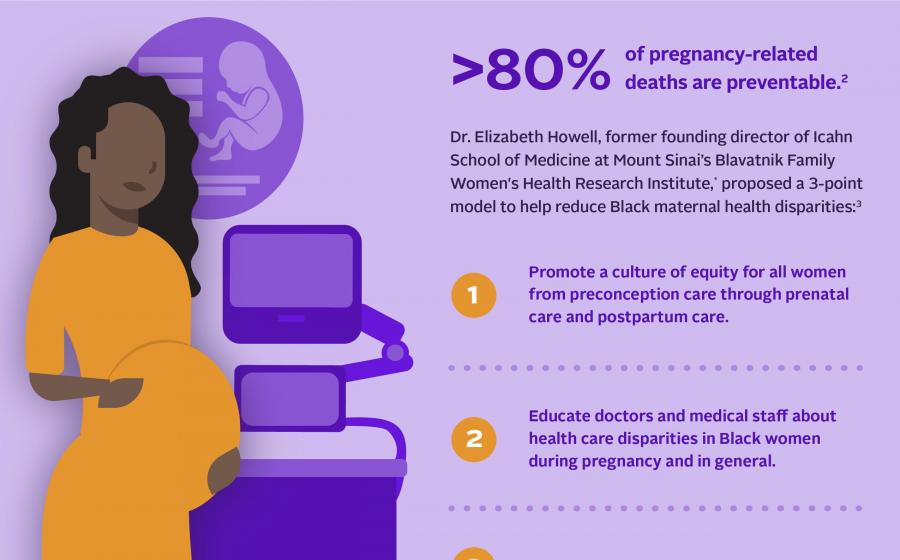
 - Despite having a standard of living among the highest in the world, the maternal mortality rate in the United States has increased over the past 25 years, according to data from the Centers for Disease Control and Prevention. The numbers are especially poor for Black women, who are two to three times more likely to die from pregnancy-related causes than their white counterparts, while black infants are more than twice as likely to die as white infants. These disparities persist regardless of level of education.
 - Spring and warmer weather means more time outside, and finding the right swing set for your yard is a great way to get your kids and their friends (parents, too!) energized and enjoying outdoor play.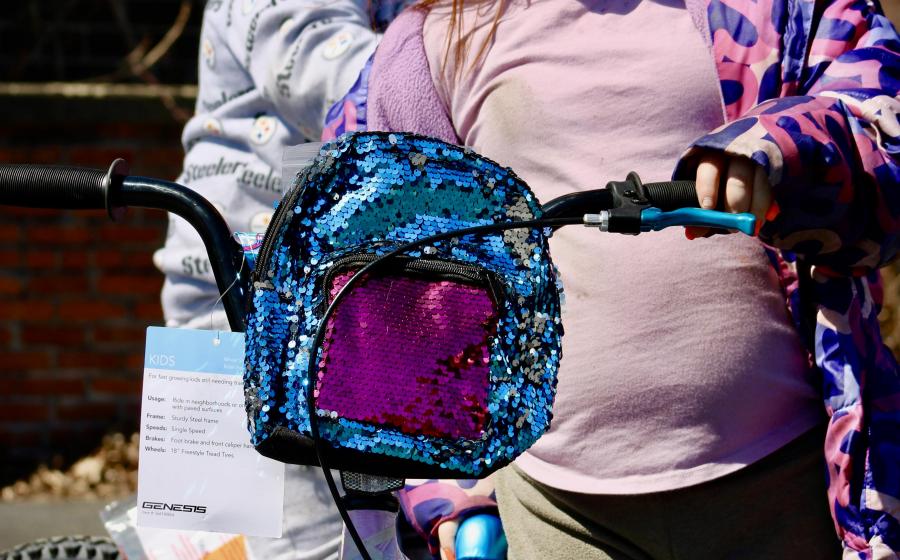
 - Marine Toys for Tots, which is traditionally known as a Christmastime charity, has evolved into a year-round force for good. The year-round assistance and emotional relief that the organization provides extends beyond the holiday season, because needs aren’t seasonal, and neither is Toys for Tots.
 - With Easter just around the corner, we bring your attention to the work of a Chinese scholar and philanthropist who has combed through 3,000 years of philosophical world history to reveal the truth of Jesus’s message and the Human Calling he brought to all humankind.

 - Filing your taxes can be stressful and intimidating, but it doesn’t have to be. As the deadline for
 - Not all heroes wear capes. Many of them wear football pads, cleats, sneakers, and skates, and some even carry a bat or a stick. We’re talking about transcendent athletes who can make the jump from the field of battle to the silver screen.
 - Whether you’re a player, fan, coach or bettor, this NBA season has been wild, featuring moments that have shocked and delighted many across the country.

 - What a winter is has been, but spring is finally here! If you're looking for a sweet and healthy addition to spring celebrations and snacks, fresh Chilean grapes are the perfect pick.