Prematurity Awareness Month: Nourishing Hope in the NICU
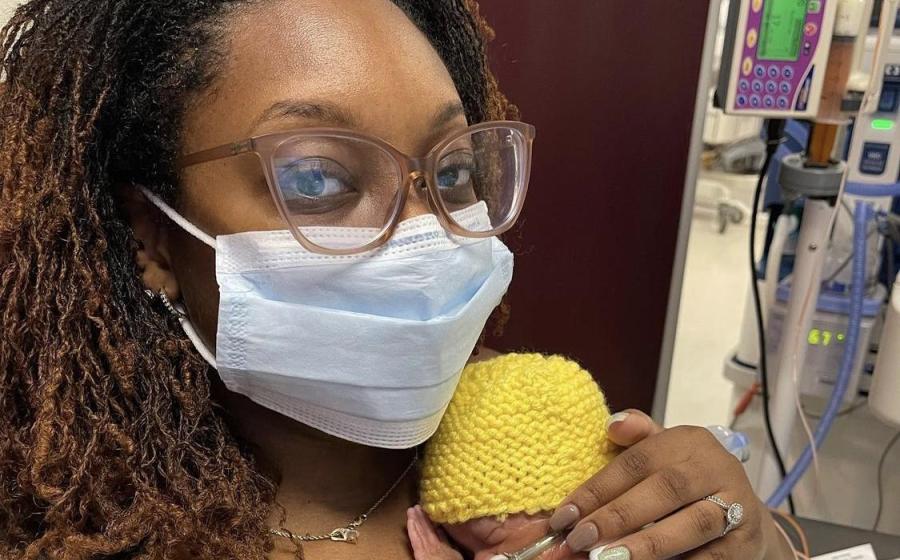
(NewsUSA) - November is Prematurity Awareness Month, a time to focus on the more than 380,000 babies born too early in the U.S. each year. For families whose little one arrives weeks or months earlier than expected, understanding advances in premature infant nutrition can help reduce complications during the neonatal intensive care unit (NICU) journey.
Feeding Preemies Better
For the smallest, most fragile preemies, nutritional advances over the past two decades have dramatically improved health outcomes. Today, babies born as early as 22 weeks can not only survive, they can thrive.
Premature babies need 20-40% more calories and protein than full-term babies. This is why doctors often add something called a nutritional “fortifier” to mom’s breastmilk or donor milk to provide the extra nutrition these babies need for healthy growth and development.
There are two types of fortifiers available: cow milk-based and breastmilk-based. In the U.S., both are labeled "human milk fortifiers," however only those from Prolacta Bioscience are made from 100% donor breastmilk, free from cow milk and corn syrup. This difference can be life-changing, especially for babies born weighing 2.75 pounds or less. Studies spanning the past two decades have shown that cow milk-based fortifiers increase the risk of serious complications, including necrotizing enterocolitis (NEC), a potentially fatal intestinal disease.
Knowledge Drives Real Change
Multiple studies show fragile preemies fed fortifiers made from donor breastmilk have better outcomes, fewer complications, and shorter hospital stays, compared to preemies fed cow milk-based products.
What preemies are fed in the NICU doesn’t just matter today — it impacts tomorrow’s milestones. Most recently, an independent study evaluated the association between an exclusive human milk diet and motor function impairment at 3 years of corrected age. Read more about the published findings.
This is why leading advocates for premature infants and their families, such as the National Black Nurses Association, Association of Women's Health, Obstetric and Neonatal Nurses, NICU Parent Network, Project NICU, Once Upon a Preemie Inc., and many others support the adoption of breastmilk-based nutrition in the NICU for the smallest, most fragile preemies, particularly to address health disparities.
Access to nutritional options can help reduce these disparities and improve outcomes for all premature babies, regardless of their background. Recent data points to the preterm birth rate among Black babies as 1.5 times higher than the rate among all other babies, and the infant death rate of Black babies is nearly twice the national average, according to the March of Dimes.
Parents Have a Choice in the NICU
This year alone, more than half of the Level 3 & 4 NICUs in the U.S. have used 100% breastmilk-based fortifiers for their smallest patients. If your baby is in a NICU that doesn’t provide this option, talk to your care team. Hospitals nationwide can order Prolacta’s breastmilk-based fortifiers for overnight delivery, even if they don't routinely offer them. Knowing your options helps ensure your baby gets the nutrition they need to grow strong and thrive. Use your voice, since your little one can’t use theirs.

 - Veterans face higher lung cancer risk from military exposures. Early screening and clinical trials save lives. Honor their service this month.
 - As the holiday lights go up and the to-do lists grow, parents everywhere are navigating a season that should feel joyful, but all too often doesn’t. According to
 - Small cell lung cancer (SCLC) is among the most aggressive, deadliest forms of lung cancer, yet it’s still too often overlooked. For decades, treatment options were limited, offering little hope to those diagnosed with SCLC, until now.
 Because of research, treatments like the recently FDA-approved Tarlatamab belong to a class of drugs called bispecific T-cell engagers (BiTEs), which harness the immune system to combat cancer. Another treatment, Lurbinectedin, slows or stops the growth of cancer cells in your body. There are also next-generation approaches, such as CAR T-cell therapy and antibody-drug conjugates, and many others, now in clinical trials. Clinical trials, once a last resort, are rapidly becoming a front door to tomorrow’s breakthroughs.
 - Do you ever notice a flutter in your chest? Feel unusually tired even after a good night’s sleep? Get winded from walking up the stairs when that never used to happen? These little signs might not feel like a big deal, but they could point to something more serious: atrial fibrillation, or AFib.
 - The cancer treatment landscape is undergoing a profound shift. Patients, healthcare providers and advocates are seeking alternatives that deliver both clinical efficacy and quality of life. At the forefront of this movement is GentleCure™, a proven, noninvasive treatment for the most common type of cancer, nonmelanoma skin cancer.
 - We all want to look as vibrant as we feel, but sometimes our skin tells a different story. If you've ever felt that dreaded dryness, dullness, or loss of firmness—especially as we get older and lines and wrinkles begin to show—you're not alone. By our forties, cell turnover slows by up to 50%1, weakening skin’s ability to produce natural Hyaluronic Acid. And it makes an impact—more than two-thirds of women over 40 report uncomfortably dry skin, with over 70% saying it's their top concern2.
 - From hospitals to surgical centers, med spas to even your dentist’s office—chances are, you or someone in your family has already received medication from a compounding pharmacy without even knowing it.
 - By Matt Werbach for the National Psoriasis Foundation



 - For most Americans, the letters "NTM" don’t mean anything. But for tens of thousands of people across the country, they represent something serious: a chronic lung disease that’s often overlooked, misunderstood, and on the rise.